
West Africa: a hybrid conflict zone
by Andrea Molle
Over the past decade, West Africa has reemerged as one of the critical frontiers in the geography of global instability. Once viewed primarily through the lens of underdevelopment and humanitarian crises, it is now a pivotal arena where transnational non-state actors intersect with great-power ambitions. The region’s chronic institutional fragility, pervasive corruption, and unresolved ethnic and social fractures have created the perfect conditions for external manipulation. Two actors epitomize this dynamic transformation: Hezbollah and the Wagner Group (now reorganized as the Africa Corps under the Russian Ministry of Defense). Despite their ideological and operational differences, both embody a shared strategic logic—the outsourcing of influence and the use of hybrid, deniable instruments of power projection.
Hezbollah’s “Silent Colonization”
Unlike the Middle East, West Africa is not a direct battlefield for Hezbollah’s military arm. Instead, it functions as a logistical and financial ecosystem sustaining the organization’s global activities. Leveraging the extensive Lebanese diaspora—particularly in countries such as Sierra Leone, Liberia, Côte d’Ivoire, and Senegal—Hezbollah has built a network of front companies and illicit trade routes that generate substantial revenues. Through money laundering, diamond smuggling, art trafficking, and coerced donations, it channels funds back to Lebanon, compensating for declining Iranian patronage and the economic collapse at home.
Hezbollah’s African operations reveal a new form of strategic adaptation. The group has refined its capacity to operate under the radar by using honorary consulates, dual citizenships, and diplomatic covers, which provide legitimacy and insulation from scrutiny. This approach corrodes local economies by fusing political patronage with criminal enterprise, effectively blurring the boundary between state and non-state activity. While Hezbollah does not seek territorial control, it effectively colonizes African financial systems, embedding itself within the informal economy. The consequences are corrosive: institutions weakened, political elites compromised, and sovereignty diluted.
Wagner and the Militarization of Influence
If Hezbollah’s penetration is stealthy and economic, the Wagner Group’s is overtly coercive and militarized. Operating from Sudan to Mali, the Russian private military contractor represents the Kremlin’s mechanism of “plausible deniability”—a way to reassert geopolitical influence without formal state accountability. Through the promise of counterterrorism assistance, regime protection, and disinformation campaigns, Wagner has embedded itself in the security architecture of fragile African states. Its contracts often include mining concessions and strategic resource rights, creating a self-financing cycle of exploitation.
Wagner’s activities in Mali, for instance, demonstrate how counterterrorism rhetoric masks predatory behavior. The infamous Moura massacre in 2022—where hundreds of civilians were executed—illustrates the brutality accompanying this partnership. Far from stabilizing the Sahel, Russian involvement has deepened conflicts, alienated local communities, and provided jihadist movements with powerful narratives of foreign occupation and repression. The group’s rebranding as Africa Corps following Yevgeny Prigozhin’s death indicates Moscow’s determination to institutionalize this model of semi-official imperialism, using mercenaries as instruments of geopolitical leverage.

A Hybrid Battleground
Together, Hezbollah and Wagner transform West Africa into a hybrid conflict zone—a space where terrorism, organized crime, and great-power competition converge. Hezbollah’s economic infiltration and Wagner’s militarized presence feed off the same vulnerabilities: weak governance, the absence of rule of law, and the marginalization of local populations. The result is a multidimensional destabilization process that undermines both national and regional security architectures.
The implications extend far beyond Africa. Hezbollah’s money-laundering networks connect to banks and shell companies in Europe, the Gulf, and Latin America, while Russia’s African expansion provides Moscow with strategic leverage over global supply chains of gold, uranium, and rare minerals. These dynamics expose Europe’s southern flank to a new form of geopolitical pressure—one that operates below the threshold of conventional war but erodes resilience from within.
The Need for a Paradigm Shift
Traditional Western responses—whether development aid or military cooperation—have proven insufficient. Initiatives like Italy’s Mattei Plan, while well-intentioned, risk remaining superficial if not anchored in structural reforms that address governance, transparency, and institutional capacity. The challenge posed by Hezbollah and Wagner is not only one of security but also of state capture and financial sovereignty.
A credible European strategy must therefore integrate security, governance, and finance. This means empowering African judicial systems, reinforcing anti–money laundering mechanisms, enhancing intelligence-sharing, and regulating the diplomatic loopholes exploited by illicit actors. Only by addressing the root causes of vulnerability—economic dependency, political fragility, and lack of oversight—can external manipulation be contained.
Italy’s Strategic Opportunity
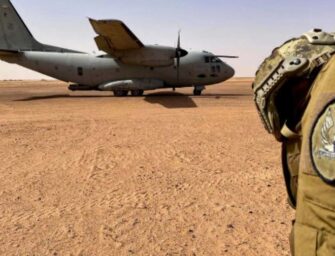
For Italy, this crisis presents both a threat and an opportunity. Given its geographical proximity, colonial legacy, and diplomatic credibility, Rome is well placed to shape a new European approach based on genuine partnership rather than paternalism. Italian defense cooperation, already active through the Missione Bilaterale di Supporto in Niger and other initiatives, can be expanded to include training, infrastructure, and judicial support. More importantly, Italy can champion the idea that African security is inseparable from European security—an interdependence that must guide the EU’s external policy for the coming decades.
Ultimately, West Africa is a microcosm of the emerging global order. The interplay of armed networks, criminal economies, and foreign interventions demonstrates how instability has become both a weapon and a market. Hezbollah and Wagner reveal the porous boundaries between terrorism, organized crime, and geopolitical ambition. To remain relevant and resilient, Europe must recognize this new reality—not merely reacting to crises but shaping the norms and partnerships that can prevent them. Africa’s instability is not a distant problem; it is the mirror of Europe’s own strategic complacency.













There are no comments
Add yours