Over the past decade, West Africa has reemerged as one of the critical frontiers in the geography of global instability. Once viewed primarily through the lens of underdevelopment and humanitarian crises, it is now a pivotal arena where transnational non-state actors intersect with great-power ambitions. The region’s chronic institutional fragility, pervasive corruption, and unresolved ethnic and social fractures have created the perfect conditions for external manipulation. Two actors epitomize this dynamic transformation: Hezbollah and the Wagner Group (now reorganized as the Africa Corps under the Russian Ministry of Defense). Despite their ideological and operational differences, both embody a shared strategic logic—the outsourcing of influence and the use of hybrid, deniable instruments of power projection.
Hezbollah’s “Silent Colonization”
Unlike the Middle East, West Africa is not a direct battlefield for Hezbollah’s military arm. Instead, it functions as a logistical and financial ecosystemsustaining the organization’s global activities. Leveraging the extensive Lebanese diaspora—particularly in countries such as Sierra Leone, Liberia, Côte d’Ivoire, and Senegal—Hezbollah has built a network of front companies and illicit trade routes that generate substantial revenues. Through money laundering, diamond smuggling, art trafficking, and coerced donations, it channels funds back to Lebanon, compensating for declining Iranian patronage and the economic collapse at home.
Hezbollah’s African operations reveal a new
form of strategic adaptation. The group has refined its capacity to
operate under the radar by using honorary consulates, dual citizenships, and
diplomatic covers, which provide legitimacy and insulation from scrutiny.
This approach corrodes local economies by fusing political patronage with
criminal enterprise, effectively blurring the boundary between state and
non-state activity. While Hezbollah does not seek territorial control, it
effectively colonizes African financial systems, embedding itself within the
informal economy. The consequences are corrosive: institutions weakened,
political elites compromised, and sovereignty diluted.
Wagner and the Militarization of
Influence
If Hezbollah’s penetration is stealthy and
economic, the Wagner Group’s is overtly coercive and militarized.
Operating from Sudan to Mali, the Russian private military contractor
represents the Kremlin’s mechanism of “plausible deniability”—a way to
reassert geopolitical influence without formal state accountability. Through
the promise of counterterrorism assistance, regime protection, and
disinformation campaigns, Wagner has embedded itself in the security
architecture of fragile African states. Its contracts often include mining
concessions and strategic resource rights, creating a self-financing cycle
of exploitation.
Wagner’s activities in Mali, for instance, demonstrate how counterterrorism rhetoric masks predatory behavior. The infamous Moura massacre in 2022—where hundreds of civilians were executed—illustrates the brutality accompanying this partnership. Far from stabilizing the Sahel, Russian involvement has deepened conflicts, alienated local communities, and provided jihadist movements with powerful narratives of foreign occupation and repression. The group’s rebranding as Africa Corps following Yevgeny Prigozhin’s death indicates Moscow’s determination to institutionalize this model of semi-official imperialism, using mercenaries as instruments of geopolitical leverage.
Screenshot of an article investigating Wagner’s crimes, published by Jeune Afrique on 24th June 2025
A Hybrid Battleground
Together, Hezbollah and Wagner transform
West Africa into a hybrid conflict zone—a space where terrorism,
organized crime, and great-power competition converge. Hezbollah’s economic
infiltration and Wagner’s militarized presence feed off the same
vulnerabilities: weak governance, the absence of rule of law, and the
marginalization of local populations. The result is a multidimensional
destabilization process that undermines both national and regional security
architectures.
The implications extend far beyond Africa. Hezbollah’s
money-laundering networks connect to banks and shell companies in Europe,
the Gulf, and Latin America, while Russia’s African expansion
provides Moscow with strategic leverage over global supply chains of gold,
uranium, and rare minerals. These dynamics expose Europe’s southern flank
to a new form of geopolitical pressure—one that operates below the threshold of
conventional war but erodes resilience from within.
The Need for a Paradigm Shift
Traditional Western responses—whether development
aid or military cooperation—have proven insufficient. Initiatives
like Italy’s Mattei Plan, while well-intentioned, risk remaining
superficial if not anchored in structural reforms that address governance,
transparency, and institutional capacity. The challenge posed by Hezbollah and
Wagner is not only one of security but also of state capture and financial
sovereignty.
A credible European strategy must therefore
integrate security, governance, and finance. This means empowering
African judicial systems, reinforcing anti–money laundering mechanisms,
enhancing intelligence-sharing, and regulating the diplomatic loopholes
exploited by illicit actors. Only by addressing the root causes of
vulnerability—economic dependency, political fragility, and lack of
oversight—can external manipulation be contained.
Italy’s Strategic Opportunity
For Italy, this crisis presents both
a threat and an opportunity. Given its geographical proximity, colonial legacy,
and diplomatic credibility, Rome is well placed to shape a new European
approach based on genuine partnership rather than paternalism. Italian
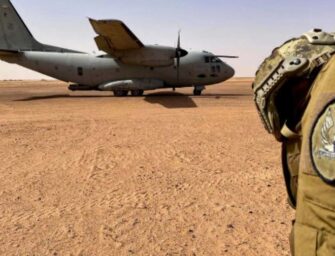
defense cooperation, already active through the Missione Bilaterale di
Supporto in Niger and other initiatives, can be expanded to include training,
infrastructure, and judicial support. More importantly, Italy can champion
the idea that African security is inseparable from European security—an
interdependence that must guide the EU’s external policy for the coming
decades.
Ultimately, West Africa is a microcosm
of the emerging global order. The interplay of armed networks, criminal
economies, and foreign interventions demonstrates how instability has become
both a weapon and a market. Hezbollah and Wagner reveal the porous boundaries
between terrorism, organized crime, and geopolitical ambition. To remain
relevant and resilient, Europe must recognize this new reality—not merely
reacting to crises but shaping the norms and partnerships that can prevent
them. Africa’s instability is not a distant problem; it is the mirror of
Europe’s own strategic complacency.
Italy: the 2025-2027 Defence White Paper
Strategic Priorities and Challenges for Italy’s Security
by Andrea Molle
The 2025–2027 Multi-Year Defense Policy
Document (DPP) is set against a backdrop of profound geopolitical and
strategic transition for both Italy and Europe. Following NATO’s consolidation
in Eastern Europe and the growing instability across Africa and the broader
Mediterranean, Italy’s Defense Ministry seeks to strengthen the country’s
overall deterrence, interoperability, and resilience. The 2025 DPP does not
mark a break from previous years but rather consolidates an already established
trajectory—one of gradual modernization, technological sophistication, and
increasing integration with the national defense industry.
The document emphasizes the need to
maintain a credible and autonomous posture within the European framework while
reaffirming the centrality of the Atlantic alliance. Its dual objective is to
enhance Italy’s participation in EU defense programs (such as the EDF and
PESCO) while ensuring alignment with NATO’s operational requirements. This dual
membership entails a rise in capital expenditure—not through new funding, but
through the stabilization of already authorized resources—directed toward
high-tech platforms, cyber and space capabilities, and integrated
command-and-control infrastructures.
From an economic standpoint, the DPP
confirms a defense budget exceeding €31 billion in 2025, with a
distribution that prioritizes investment over current expenditures. Yet behind
this apparent consolidation lies a tension between financial sustainability and
strategic ambition. Military spending growth remains bound by overall fiscal constraints,
and much of the programming depends on maintaining Parliament-approved funding.
The goal of reaching NATO’s 2 percent of GDP benchmark is invoked as a
political aspiration, but still appears more a trajectory than an imminent
target.
A distinctive feature of the document is
its emphasis on digital transformation. The Armed Forces are portrayed
as actors in an “operational digitalization” process that includes advanced
C4ISR systems, cyber-defense capabilities, and the integration of space and
maritime domains. In this respect, the DPP continues to advance the concept of multi-domain
integration, both technological and doctrinal: the future of Italian
defense lies in the ability to operate simultaneously across land, sea, air,
cyber, cognitive, and space domains with coherent doctrine and coordination.
Politically, the 2025 DPP aligns closely
with the government’s strategic priorities in the Mediterranean and Africa.
Italy aims to reinforce its military and diplomatic presence in the “enlarged
Mediterranean” — from Gibraltar to the Red Sea — as a vital area for energy
security, trade routes, and regional stability. Missions in Lebanon, Iraq, the
Sahel, and the Horn of Africa are confirmed, though with gradual rebalancing
depending on the availability of forces and resources.
Still, the document is not without
ambiguities. Several analyses note that the 2025 DPP is less transparent
than its predecessors, offering fewer details on specific budget allocations
and providing less granularity regarding individual weapons programs. While
some interpret this as an effort to simplify public communication, others see
it as a step backward in the democratic accountability of military spending.
The Technical Annex, an integral
part of the DPP, provides a detailed mapping of ongoing and future programs. It
includes development plans for the Army (new combat vehicles and anti-drone
capabilities), the Navy (modernization of FREMM frigates, U212NFS submarines,
new patrol vessels, and amphibious units), and the Air Force (upgrades to the
F-35 fleet, MALE drones, and air-defense assets). It also lists space programs
— particularly in surveillance and satellite positioning — through which Italy
seeks to consolidate a limited but meaningful degree of strategic autonomy.
In terms of guiding philosophy, the 2025
DPP confirms the Italian Defense establishment’s tendency to view itself not
merely as a military instrument but as a national security infrastructure,
capable of operating in civilian domains such as civil protection, public
health, and environmental emergencies. This dual-use approach responds
both to internal efficiency goals and to the political need to build social
consensus around defense spending by presenting it as an investment in
collective security.
Overall, the 2025–2027 DPP is a document of
continuity and consolidation rather than rupture—ambitious in intent,
cautious in allocation, and aimed at keeping Italy within Europe’s leading
group in terms of defense technology and industrial capacity. Yet questions of
transparency and democratic oversight remain open, as spending reaches
structurally high levels increasingly justified by a narrative of permanent
emergency in international affairs.
The DPP 2025–2027 thus confirms the
tendency of Italian defense policy to be both reactive and conservative,
rather than fully strategic. It is reactive insofar as it adapts to new
threats—hybrid warfare, cyberattacks, and competition in space and maritime
domains—but conservative in its decision-making structures and
resource-allocation mechanisms. Planning remains largely incremental,
adjusting existing multi-year programs rather than redefining strategic
priorities. In this sense, the DPP 2025 is more a management document
than a visionary one.
Strategically, Italian defense continues to
operate on two parallel tracks: full integration within NATO’s
deterrence posture against Russia on the one hand, and preservation of a
distinct Mediterranean identity on the other, enabling Italy to remain a key
player in North Africa and the Middle East. This dual orientation sometimes
produces a dispersive effect: forces and budgets are divided among distant
theaters and heterogeneous missions (projection, stabilization, deterrence, and
civilian support). The result is a globally coherent posture, but not always an
efficient one in terms of focus and concentration of effort.
From an industrial perspective, the
DPP continues the strategy of integrating the military system with the national
production base. The defense complex is portrayed as a technological
ecosystem in which major firms — Leonardo, Fincantieri, MBDA, and Iveco
Defence — act as bridges between operational capability and industrial
innovation. While consistent with the European logic of EDF and PESCO, this
approach carries a growing risk of political dependency on
industrial-chain maintenance needs rather than genuine strategic priorities. In
other words, planning risks being driven more by industrial supply logic
than by clear operational demand.
A second critical issue, implicit
throughout the DPP 2025–2027, is the persistent absence of a “total defense”
or integrated national security paradigm, similar to those found in Nordic
countries. Despite growing awareness of hybrid threats—cyber, infrastructural,
cognitive, and social—the document continues to frame resilience almost
exclusively in military or institutional-technical terms, neglecting the social
and civic dimensions of defense. In other words, Italy still lacks a vision
that treats citizens, businesses, and local communities as active participants
in the national security system. Investments remain heavily concentrated on the
armed instrument and its external projection, with limited effort to build a societal
resilience capable of reducing Italy’s vulnerability to energy,
informational, and logistical crises. The reference point should be the Nordic
“total defense” model—as in Sweden, Finland, or Norway—where defense, civil
protection, strategic communication, and civic education are integrated into a
single framework. Italy remains anchored instead to a vertical conception of
security, entrusted to the state rather than shared with society. The risk is
that of a modern, dual-use defense system, yet one isolated from its
civilian fabric and unable to translate security into a collective civic
culture.
A third area of concern involves
transparency and democratic legitimacy. Compared to previous DPPs, the 2025
edition reduces public detail on expenditures and programs, making
parliamentary and civil oversight more difficult. This may stem from technical
reasons — simplifying communication — but politically it signals a broader
trend: the normalization of high-level defense spending justified by
geopolitical necessity but increasingly insulated from public debate or from a
broader resilience strategy. Thus, defense risks becoming a “protected” sector
of the national budget, where consensus is built more through the rhetoric of
security than through measurable results.
At the European level, the 2025 DPP
reflects an effort to align with the emerging “ReArm Europe” paradigm
but remains hesitant to promote genuine industrial or operational integration.
Italy positions itself as a reliable contributor rather than a conceptual
leader, following the Franco-German trajectory while adapting it to its
Mediterranean focus and strengths in naval and aerospace industries.
In conclusion, the DPP expresses a pragmatic
balance — a compromise between fiscal constraints, interoperability
requirements, and aspirations for strategic autonomy. Yet it still lacks a
coherent vision of Italy’s role in the international security system.
Increased spending, digitalization, and industrial cooperation are means, not
ends. The 2025 DPP, though technically sound, does not convincingly articulate
the ultimate political purpose—whether deterrence, regional stability, global
projection, or mere institutional continuity.
In this sense, the 2025–2027 DPP is
a necessary but not yet sufficient document: it marks the consolidation
of a modern, technologically advanced, and European-integrated defense policy,
but it leaves open the deeper question—what kind of power does Italy aspire
to be in a world increasingly defined by permanent competition among great
actors?
📌#ReaCT2023 The 4th annual Report on Terrorism and Radicalisation in Europe ⬇📈launches on 23rd May. Don't miss it! 📊📚Numbers, trends, analyses, books, interviews👇 pic.twitter.com/KLIWWlrJXS
🔴📚 OUT SOON! #ReaCT2023 Annual Report on Terrorism and Radicalisation in Europe | Start Insight ⬇ 16 articles by different authors discuss current trends and numbers. Available in Italian and English startinsight.eu/en/out-soon-r…
🔴@cbertolotti1 a FanPage sulle varie ipotesi dell'attacco👉"(...) non si tratterebbe di droni in grado di fare danni significativi, ma piuttosto di una tipologia di equipaggiamento in grado di fare danni limitati con l'obiettivo di portare l'attenzione mediatica sulla questione" twitter.com/cbertolotti1/s…
Per fornire le migliori esperienze, utilizziamo tecnologie come i cookie per memorizzare e/o accedere alle informazioni del dispositivo. Il consenso a queste tecnologie ci permetterà di elaborare dati come il comportamento di navigazione o ID unici su questo sito. Non acconsentire o ritirare il consenso può influire negativamente su alcune caratteristiche e funzioni.
Funzionale
Always active
L'archiviazione tecnica o l'accesso sono strettamente necessari al fine legittimo di consentire l'uso di un servizio specifico esplicitamente richiesto dall'abbonato o dall'utente, o al solo scopo di effettuare la trasmissione di una comunicazione su una rete di comunicazione elettronica.
Preferences
The technical storage or access is necessary for the legitimate purpose of storing preferences that are not requested by the subscriber or user.
Statistiche
The technical storage or access that is used exclusively for statistical purposes.L'archiviazione tecnica o l'accesso che viene utilizzato esclusivamente per scopi statistici anonimi. Senza un mandato di comparizione, una conformità volontaria da parte del vostro Fornitore di Servizi Internet, o ulteriori registrazioni da parte di terzi, le informazioni memorizzate o recuperate per questo scopo da sole non possono di solito essere utilizzate per l'identificazione.
Marketing
L'archiviazione tecnica o l'accesso sono necessari per creare profili di utenti per inviare pubblicità, o per tracciare l'utente su un sito web o su diversi siti web per scopi di marketing simili.