

Institutionalizing Irregular Warfare: Inside DoDI 3000.07 (2025)
by Andrea Molle (in the US)
Institutionalizing Irregular Warfare: Inside DoDI 3000.07 (2025)
The Department of Defense’s 2025 reissue of DoD Instruction 3000.07 marks a decisive step in making Irregular Warfare (IW) a standing, resourced, and assessed function of the U.S. military—on par with conventional warfighting. By converting the 2014 directive into an instruction, the document moves beyond broad guidance to assign concrete responsibilities, establish governance, and formalize the Irregular Warfare Center (IWC) as a hub for knowledge, education, and partner engagement. Below is a practitioner-focused read on what it is, how it works, and why it matters.
What DoDI 3000.07 does
At its core, the instruction:
- Defines IW as the realm where state and non-state actors pursue coercion and assurance primarily through indirect, often non-attributable, and asymmetric activities—complementing rather than replacing conventional operations.
- Enumerates the IW portfolio, spanning unconventional warfare; foreign internal defense; counterterrorism and counterinsurgency; stabilization; DoD support to counter-threat finance and counter-transnational organized crime; military information support operations; civil affairs; and portions of security cooperation, security force assistance, civil-military operations, and operations in the information environment.
- Positions IW in strategic competition, emphasizing whole-of-government synchronization and allied/partner integration to erode adversary legitimacy and influence while bolstering that of partners.
- Creates durable governance for planning, resourcing, education, readiness assessment, and lesson sharing—anchored by a reinvigorated Irregular Warfare Center.
The policy logic: IW as competitive statecraft
The instruction treats IW as a principal way to compete short of large-scale combat. Rather than measuring success only by enemy attrition, it prioritizes shifts in legitimacy, influence, access, and partner capacity—the intangible but decisive features of contested security environments. Importantly, it embeds IW within law and policy (e.g., Law of War; civilian-harm mitigation), and acknowledges the interagency realities that sometimes place certain activities under authorities outside Title 10.

Governance and roles: who does what
- USD(P) (Under Secretary of Defense for Policy) is the policy integrator and convenor—aligning IW with national strategy, leading interagency and international policy engagement, and ensuring that operations, activities, and investments (OAIs) map to prioritized problems.
- ASD(SO/LIC) provides day-to-day policy development and supervision across the special operations and irregular warfare enterprise, including oversight of the IWC and progress reporting.
- Irregular Warfare Center (IWC) serves as the coordinating brain and central repository for IW knowledge: doctrine and concepts, education and curricula, research and lessons learned—supporting DoD components, other U.S. agencies, and foreign partners.
- DSCA acts as Executive Agent for the IWC—providing staffing, budgeting, agreements, and contracting muscle—and links IW to the broader security cooperation ecosystem.
- CJCS and Joint Staff assess joint IW readiness and gaps, guide global integration, and translate findings into programming and force-development advice.
- Combatant Commands identify theater-specific IW requirements, training, and language/region needs; craft partner-building approaches that enable allied-led missions with a light U.S. footprint; and drive DOTMLPF-P change requests from the field.
- Military Departments institutionalize IW as a core competency, run training and readiness programs, and maintain sufficient capabilities across formations—conventional and SOF.
- USSOCOM ensures SOF-peculiar IW capabilities (including clandestine and non-attributable options) integrate with the joint force.
- USCYBERCOM and USSPACECOM ensure the IW enterprise can leverage cyber and space access, effects, and protection; STRATCOM and USTRANSCOM contribute specialized capabilities (non-nuclear strategic effects, non-standard lift), while DIA/Defense Intelligence refine analytic tools, tradecraft, and training tailored to IW problems.
Education, readiness, and knowledge management
A major thrust of the instruction is human capital. Services and joint schools must embed IW into PME and pre-deployment training, with attention to language, regional expertise, and culture; interagency fluency; and partner-building competencies. The IWC curates and disseminates curricula and lessons, reducing duplication and speeding adaptation. Annual assessments connect IW outcomes and capability gaps to the Planning, Programming, Budgeting, and Execution cycle so that IW is not an afterthought when resources get tight.
Domains and enablers: cyber, space, information
DoDI 3000.07 explicitly integrates cyberspace, space, and operations in the information environment into IW campaigning. The point is not to militarize every problem, but to ensure the IW planner can gain access, protect force and partners, shape audiences, expose malign activity, and contest adversary narratives with joint, allied, and interagency tools. This is as much about defending partner legitimacy as about degrading adversary networks.
What’s new versus 2014—and why it matters
Three changes are most consequential:
- From directive to instruction. This shifts IW from guidance to tasking: named leads, timelines, assessments, and integration into resource decisions.
- Institutionalizing the IWC. The Center becomes the connective tissue of a previously fragmented enterprise—linking policy, research, education, and partner engagement.
- Deeper integration of cyber/space and information. The instruction reflects the reality that modern IW depends on persistent presence and access—physical, virtual, and cognitive.
Together, these changes are designed to make IW persistent, predictable, and measurable, rather than episodic and personality-driven.

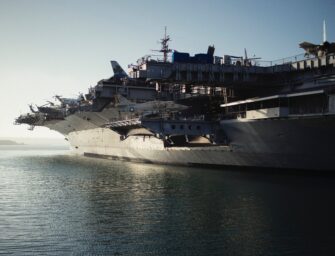
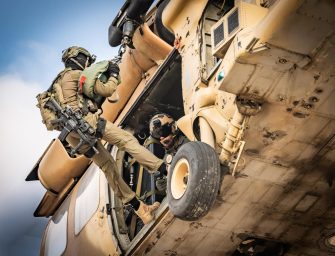
Photo by Deniece Platt on Pixabay
Practical implications
- For planners and operators: Expect greater emphasis on campaigning—sequencing diverse OAIs to create strategic effects over time, not one-off events. Measures of effectiveness will look at influence, legitimacy, and partner capacity, not just kinetic outputs.
- For Services and force developers: IW skills and formations will be planned and programmed rather than ad hoc. Training pipelines must blend regional expertise, influence operations, and partner enablement with the ability to integrate SOF and conventional forces.
- For the interagency: The instruction invites tighter alignment with diplomacy, development, law enforcement, and financial authorities. DoD is signaling it will show up as a team player in complex competitions where military instruments are necessary but not sufficient.
- For allies and partners: Expect renewed investment in Security Force Assistance and Institutional Capacity Building that aim for partner-led, sustainable outcomes—especially where U.S. strategic aims are best served by enabling others.
- For analysts and educators: The IWC’s knowledge function should make it easier to access quality curricula, case studies, and lessons learned, and to bridge research and practice.
Risks and open questions
- Measuring the intangible. Legitimacy and influence are hard to quantify. The success of the instruction hinges on building credible, decision-useful assessment frameworks that avoid perverse incentives.
- Authority seams. Activities at the edge of Title 10/Title 50 or between DoD and civilian agencies can create friction. Clear processes and shared campaign plans will be vital.
- Resource competition. In tight budgets, IW must prove its value without cannibalizing essential conventional readiness. The instruction’s tie-in to the programming cycle is promising—but only if leaders enforce it.
- Partner politics. Building the capacity of others is inherently political and sometimes controversial. The instruction presumes strong governance, oversight, and human-rights due diligence to protect U.S. interests and values.
Bottom line
DoDI 3000.07 is not about glamorizing the “shadow” side of conflict. It is about normalizing the United States’ ability to campaign with allies and partners in contested spaces where legitimacy, influence, and access decide outcomes long before major combat. By hard-wiring governance, education, assessments, and domain integration—and by elevating the Irregular Warfare Center—the instruction gives practitioners a realistic blueprint to compete and, when necessary, fight irregularly with rigor and accountability.


























There are no comments
Add yours