Tik Tok, social media and radicalisation
by Chiara Sulmoni
Above on this page you will find: “Trapped by TikTok’s Algorithm,” an episode of the program ‘Patti Chiari’ (Radiotelevisione svizzera di lingua italiana, RSI), which offers a 360-degree investigation of the digital platform, featuring reports by Nicola Agostinetti and Valerio Scheggia, along with various studio guests.
It includes a contribution by Chiara Sulmoni (START InSight) on extremist content (from 23′ onward).
Platforms, Algorithms, and Emotional Engagement
In recent years, platforms such as TikTok have established themselves as central environments in the construction of youth identity. They are not merely communication channels, but spaces where young people interpret the world, expand their relationships, and give meaning to their experiences. In this context, extremist content has also evolved: no longer limited to explicit propaganda, it now takes the form of narratives embedded within the platform’s cultural codes, designed to appeal to emotions before critical reflection.
Algorithmic logics play a decisive role: recommendation systems prioritize content capable of capturing immediate attention, favoring strong emotions such as anger, fear, outrage, or pride. This mechanism also rewards controversial content, regardless of its nature, contributing to its spread and visibility. On TikTok in particular, continuous and automated consumption—one video after another—reduces intentional choice and accelerates exposure, leaving little room for reflection.
Aesthetics and Codes of Digital Extremism
The form of content is equally crucial. Rapid sequences, evocative imagery (often generated with the support of AI), personal storytelling, Q&A formats, and motivational speeches are all formats familiar to younger audiences. Politics, religion, identity, and entertainment blend into a continuous stream in which the boundaries between ideological and neutral content become increasingly blurred. Techniques such as bait-and-switch—viral content used as a hook—or the use of trending audio to “mask” or make problematic messages more appealing allow radical narratives to be gradually introduced into seemingly harmless content.
Music is a central element. In Islamist contexts, nasheed—a cappella chants from Islamic religious tradition—create a sense of solemnity, community, and shared destiny, sometimes accompanying calls to jihad. In far-right environments, genres tied to youth subcultures—rap, pop, folk, or electronic music—are often used, frequently remixed with memes and viral content. In both cases, music becomes a tool of identity alignment, fostering a sense of belonging to collective realities that transcend geographical boundaries.
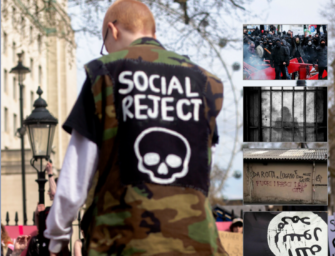
Aesthetics are highly curated and play a crucial role as well. Symbols, clothing, gestures, iconography, visual codes, and the lexicon of digital subcultures—such as those associated with the manosphere—transform extremism into not only an ideological phenomenon but also a cultural and aesthetic one. Within these environments, expressions and symbols typical of incel jargon and the broader manosphere circulate, including references to the “red pill,” the “black pill,” or identity categories such as “alpha” and “beta,” which structure simplified narratives of social and gender relations. This aesthetic is not only codified but also highly attractive: it makes content immediately recognizable, visually engaging, and often emotionally seductive, facilitating its dissemination.
The shared language is immediately understandable to those who possess the interpretive keys, but opaque to parents, teachers, and educators. Younger generations actively participate in this evolution, constantly assigning new meanings to symbols and words, and directly contributing to the construction of their own algorithmic experience. Through their interactions—likes, comments, shares, and viewing time—they shape what is progressively displayed on their screens.
In this context, so-called gamification logics also play a significant role. Violence is often softened, symbolic, or embedded within a playful framework. It may be presented as a “challenge” or a “mission,” following typical video game structures in which actions and objectives are organized into levels and rewards. This produces a perceptual shift: violence is no longer experienced as a real event, but as a performance or a test of value, creating distance from its consequences.
Particularly insidious are layered and subliminal messages. Memes, irony, and ambiguity allow for an initially light form of engagement that can gradually normalize polarizing content. Repeated exposure shapes perceptions of the world without the user being fully aware of it. Phenomena such as “Alt-Jihad” or “Islamogram”—inspired by the “Alt-right” and “Terrorgram” ecosystems within far-right circles—represent a telling example: native digital content that blends jihadist narratives, meme culture, video game aesthetics, and anime references, creating a hybrid form of propaganda adapted to the codes of Generation Z.
The Boundary Between Digital and Real
This aesthetic and narrative ecosystem does not remain confined to the symbolic realm. In some cases, it can contribute to shaping perceptions and behaviors in the real world, particularly when it intersects with conditions of isolation and individual vulnerability. Within this framework fits the case of a fifteen-year-old who, in March 2024 in Zurich, stabbed an Orthodox Jew. The boy, described as highly active online—especially on TikTok and Instagram—interacted with environments linked to a digital Islamist subculture, where he consumed and contributed to the circulation of extremist content.
Similar dynamics emerge in different contexts and on a larger scale, confirming the multiplatform nature of exposure pathways. A notable example is that of a teenager in the United Kingdom convicted of terrorism in 2026, who was part of 25 different far-right online chat groups on platforms such as Telegram, Snapchat, TikTok, and Wire. The boy described this process of building his digital identity as a form of escape from reality.
Another example, also from 2024, comes from several Swiss cantons, where threats of attacks or school shootings were reported, often through writings on school walls. According to authorities and school administrations, in most cases these were not genuine intentions but episodes linked to a trend circulating on TikTok—a kind of viral challenge among young people. Despite the absence of a concrete plan, these incidents still required police intervention and precautionary evacuations. The critical issue lies in the gap between action and intention: even actions born as imitation or viral play produce real effects, generate alarm, and contribute to lowering the threshold of tolerance toward the idea of violence, making it more present and “normalized” in the social space.
Such phenomena rarely remain isolated. More broadly, similar dynamics emerge when global events—such as international conflicts or geopolitical crises—are reinterpreted on a personal level, turning into potential “calls to action.” In these cases, the distance between the global dimension and individual experience shrinks, and events occurring elsewhere may be perceived as a direct impulse to act within one’s own context.
Recent analyses indicate that cases of online radicalization among minors are likely to increase; Swiss authorities also report a rise in the phenomenon. This trend must be understood within a broader context: social media are not merely transmission channels, but formative environments where content exposure, algorithmic dynamics, and identity needs intersect.
Countering these dynamics requires a realistic and multidisciplinary approach. Completely eliminating extremist content is impractical: messages are often ambiguous and capable of adapting their form and language to remain effective and visible within constantly evolving digital environments. At the same time, demonizing platforms is counterproductive, as they also represent spaces for creativity and participation. Moderation and deplatforming strategies are necessary, but they show clear limitations and may push users toward less regulated environments.
Ultimately, online radicalization is not the product of a single piece of content, but of a complex and cumulative ecosystem. Understanding it means recognizing the interplay between technology, society, and individual vulnerabilities—and it is precisely within this space that one of the most significant challenges of our time unfolds.
For more info on the above-mentioned Swiss cases see:
https://ctc.westpoint.edu/from-tiktok-to-terrorism-the-online-radicalization-of-european-lone-attackers-since-october-7-2023/
https://www.srf.ch/news/schweiz/amokdrohungen-an-schulen-ein-tiktok-trend-der-fuer-aufwand-und-aerger-sorgt