
From Schools to Airlines: A New Wave of Threats Across Europe
By Chiara Sulmoni
Hundreds of schools threatened, flights disrupted, television broadcasters targeted. Who is behind this wave of hoax threats? And what might be driving it?
What is happening in European schools?
From Italy to Ireland and Scotland, threatening emails warning of attacks are becoming increasingly widespread. On 11th November, more than 6’000 Italian schools received threatening messages, triggering hundreds of evacuations. Similar threats were sent to hundreds of schools across Scotland and Northern Ireland.
The emails contain threats of attacks and even “genocide”, expressed in a language that is as extreme as it is seemingly incoherent.
The messages are signed using the pseudonym Mikhail Andropov, which has also appeared in recent days in connection with threats against European airlines and media organisations.
In Italy, the self-proclaimed perpetrator presents himself as the leader of a ‘Vilayat of Misogynistan’. The name is unusual. Vilayat, a term of Arabic origin meaning province or administrative territory, has also been used by Islamic State to designate its territorial branches. Misogynistan, meanwhile, appears to evoke an imaginary territory defined by misogyny. The combination brings together disparate ideological references, raising questions about the nature of the claims of responsibility.
Threats circulated in Scotland reportedly refer instead to a purported project known as ‘Red Owl’.
The repeated use of the same pseudonym, alongside different group names, suggests a possible connection between the incidents. However, it does not yet establish whether they are the work of a single mastermind, a coordinated network operating across different geographical areas, or individuals imitating and appropriating the same identities.
Police in Scotland has assessed the threats as not credible, stating that there was no reason to evacuate schools solely on the basis of the emails received. Some schools had nevertheless already activated their emergency procedures.
What impact can threats deemed not credible have?
Even when threats turn out to be unfounded, their consequences can be very real. This was evident in Scotland following an earlier wave of hoax threats in October. According to figures reported in the British press, some schools in Glasgow recorded attendance drops of up to 50%, while the absence rate in Midlothian reached 21.5%, compared with 6.9% on the same day the previous year.
Why are the threats being issued in the names of extremist groups?
One particularly significant feature is the use of identities and claims of responsibility associated with extremist organisations, including groups with very different ideological backgrounds.
Last week, 279 threatening emails sent to Italian schools were reportedly signed in the name of Iran’s Islamic Revolutionary Guard Corps. In other incidents, the name ‘Male State’ appeared, although the Russian extremist movement has denied any involvement.
In a study published in September 2024 by the International Centre for Counter-Terrorism (ICCT), researcher Anna Kruglova traced the movement’s evolution. Founded in Russia in 2016, Male State emerged as an ultranationalist, misogynistic and racist movement, best known for its campaigns of intimidation and harassment against women and minorities.
Designated an extremist organisation by the Russian authorities in 2021, it gradually shifted its activities towards online propaganda supporting the war following Russia’s invasion of Ukraine, also adopting the name ‘Male Legion’.
Is Male State really behind the threats?
Not necessarily. Speaking to The Irish Times, Kruglova herself considered direct involvement by the movement unlikely.
The use of its name could be a deliberate attempt at misdirection, intended to suggest a Russian connection, lend greater credibility to the threats or simply create confusion.
The simultaneous references to Russian extremism, Iran’s Revolutionary Guards and names evoking jihadist imagery make attribution particularly challenging.
The claims of responsibility may not simply be false. They may have been deliberately constructed to obscure the perpetrators’ identities, generate multiple investigative leads and amplify the intimidating effect.
Nor would this be the first time Europe has faced similar incidents. Waves of hoax threats have previously affected Montenegro in 2022 and Moldova in 2023, where, according to The Irish Times, approximately 400 unfounded threats were recorded in less than a year.
Hybrid warfare, online extremism or violent nihilism: what are the possible scenarios?
Are we witnessing a coordinated campaign? An operation of psychological warfare? A form of hybrid destabilisation?
Or could the phenomenon be rooted in the world of online extremism, where transnational networks, communities sharing violent fantasies and a shifting constellation of groups and identities can reinforce one another through imitation, competition and the pursuit of notoriety?
These explanations are not necessarily mutually exclusive.
An organised campaign could exploit patterns of imitation already present in online extremist environments. Equally, individuals or small groups could appropriate existing identities and claims of responsibility without belonging to any organised structure.
Judging by the material made public so far, the language used in the emails is permeated by hatred, contempt for human life and fantasies of annihilation.
These characteristics also evoke the atmosphere found in certain nihilistic and misanthropic extremist circles, where violence is glorified as an end in itself, the suffering of others is celebrated and extreme transgression can become a means of gaining recognition and asserting one’s identity or status.
Within these digital ecosystems, often characterised by fluid ideologies and heterogeneous extremist references, provocation, intimidation and the pursuit of notoriety can become intertwined with genuine violent aspirations.
A coherent doctrine is not necessarily required. Symbols, language and ideological references can be selectively adopted, combined and repurposed to provoke, intimidate or gain status within particular online communities.
Could radicalised young people be behind these emails?
Could very young individuals be involved? And if so, are they acting independently, operating within online networks, or being manipulated by actors who remain in the shadows?
These are questions, not conclusions. The fact that schools are among the targets does not, in itself, allow us to infer the age of those responsible.
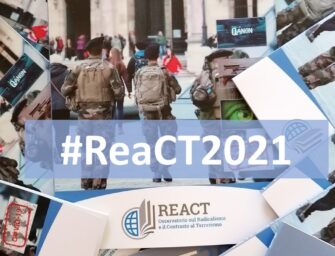
In my analysis, Radicalisation 2025: The Changing Face of Extremism in Europe, published in the ReaCT 2025 report, I had already drawn attention to the changing dynamics of youth radicalisation and the growing areas of overlap between different forms of extremism, ideologies, criminality, fascination with violence and the pursuit of status in digital environments.
This is a world in which ideological affiliations may be unstable, identities constructed or falsified, and motivations difficult to fit within traditional categories of terrorism and extremism.
At present, however, there is insufficient evidence to establish that this wave of threats originates in such environments, or to attribute responsibility to any particular state, organisation or network.
Why is a single email enough to put an entire system under pressure?
One thing is already clear: an actual attack is not necessarily required to produce the destabilising effects of a threat.
All it takes is an email, a claim of responsibility that is difficult to verify, and the need for authorities to treat every threat as potentially genuine.
There is also a further risk: repeated false alarms can lead to desensitisation, increasing the likelihood that subsequent threats will be underestimated.
This is a vulnerability that cannot be ignored. The absence of a genuine danger in a series of incidents does not guarantee that every future warning will be equally unfounded. Nor can the possibility be ruled out, in principle, that a radicalised individual might seek to exploit an atmosphere of confusion and alarm.
The result is a pronounced asymmetry: minimal costs for those issuing the threats, but substantial costs for those responsible for ensuring public safety.
Such threats can generate fear, disrupt essential activities, mobilise resources and foster a widespread sense of vulnerability.
What is the geopolitical dimension of these incidents?
It is in this context that the phenomenon may also acquire a geopolitical dimension.
Schools, transport networks and the media are pillars of everyday life. Disrupting their functioning, even through false alarms, can contribute to eroding public trust in institutions and their ability to protect the population.
Yet it is essential to distinguish effects from intentions. The fact that a series of threats produces destabilising consequences does not, in itself, demonstrate that it was conceived as part of a hybrid warfare operation.
The question, therefore, is not simply who is sending these threats, but whether a broader strategy lies behind their apparent fragmentation.
More importantly, how can we distinguish an organised destabilisation campaign from the dynamics of an increasingly fluid, transnational and difficult-to-decipher online extremist landscape?
Or could the interaction between these two worlds itself represent one of the emerging vulnerabilities facing European security?
Making this distinction is far from straightforward, but it is essential if we are to understand the nature of the threat and respond proportionately.
Further reading
Anna Kruglova, The Rise and Fall of the Male State Movement, ICCT, September 2024:
https://icct.nl/publication/rise-and-fall-male-state-movement-0
Naomi O’Leary, Who is behind the wave of bomb threats in Ireland and Europe?, The Irish Times, 6 November 2026:
https://www.irishtimes.com/world/europe/2026/11/06/who-is-behind-the-wave-of-bomb-threats-in-ireland-and-europe/
The Sun, 11 November 2026:
https://www.thesun.co.uk/news/40991663/scotland-school-bomb-hoax-threat-group-responsibility/
Chiara Sulmoni, Radicalisation 2025: The Changing Face of Extremism in Europe, ReaCT 2025:
https://www.osservatorioreact.it/react-rivista-rapporto/react2025-n-6-anno-6-la-rivista-rapporto/